

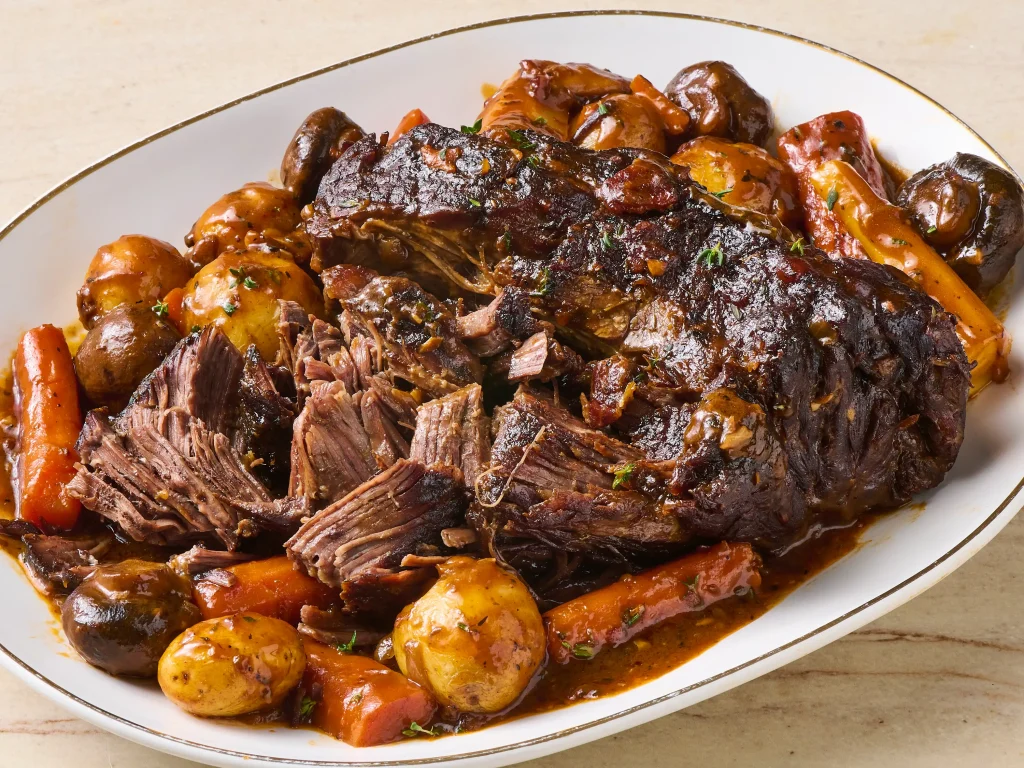
Classic beef pot roast is a slow-cooked meal built around tender chuck roast, potatoes, carrots, and a savory beef gravy. The long cooking time softens the connective tissue in the beef, allowing it to become tender enough to pull apart with a fork.
Browning the roast before placing it in the slow cooker adds deeper flavor to both the meat and gravy. Potatoes, carrots, onion, garlic, herbs, tomato paste, and Worcestershire sauce cook alongside the beef, making this a complete one-pot dinner.
This recipe is especially useful for weekends, family dinners, or any day when you want a comforting meal that can cook mostly unattended.
Why You’ll Love This Recipe
- Chuck roast becomes tender and flavorful after slow cooking.
- Potatoes, carrots, and beef cook together in one slow cooker.
- Browning the meat creates a richer cooking liquid and gravy.
- The recipe uses familiar, widely available ingredients.
- Most of the cooking time is hands-off.
- Leftovers reheat and freeze well.
Ingredients
- 1 boneless beef chuck roast, 3 1/2 to 4 pounds: Its marbling and connective tissue make it ideal for slow cooking.
- 2 teaspoons kosher salt: Seasons the roast.
- 1 teaspoon ground black pepper: Adds mild warmth.
- 2 tablespoons olive oil: Used to brown the beef.
- 1 large yellow onion, cut into thick wedges: Adds sweetness and depth.
- 4 large carrots, peeled and cut into 2-inch pieces: Become tender while retaining some structure.
- 1 1/2 pounds baby Yukon Gold potatoes: Their creamy texture holds up well during slow cooking.
- 4 garlic cloves, minced: Add savory flavor to the cooking liquid.
- 2 tablespoons tomato paste: Deepens the gravy and contributes mild acidity.
- 2 cups low-sodium beef broth: Provides moisture and forms the base of the gravy.
- 1 tablespoon Worcestershire sauce: Adds savory depth.
- 1 teaspoon dried thyme: Complements the beef and vegetables.
- 1 teaspoon dried rosemary: Adds an earthy herbal flavor.
- 2 bay leaves: Flavor the cooking liquid as the roast cooks.
- 2 tablespoons cornstarch: Thickens the cooking liquid into gravy.
- 2 tablespoons cold water: Combines with the cornstarch to make a slurry.
- 2 tablespoons chopped fresh parsley, optional: Adds color and freshness before serving.
Ingredient Substitutions
- Beef chuck roast: Use a shoulder roast or brisket. Avoid very lean cuts, which can become dry during long cooking.
- Baby Yukon Gold potatoes: Substitute baby red potatoes or larger Yukon Gold potatoes cut into 2-inch pieces.
- Fresh carrots: Baby carrots can be used, although large carrots cut into thick pieces generally hold their texture better.
- Beef broth: Beef stock can be used for a richer flavor.
- Dried thyme and rosemary: Substitute 1 tablespoon each of chopped fresh thyme and rosemary.
- Worcestershire sauce: Soy sauce can provide a similar savory quality.
- Cornstarch: Use 3 tablespoons of all-purpose flour mixed with 1/4 cup cold water, although the gravy may be less glossy.
How to Make Beef Pot Roast
- Prepare the roast.
Pat the chuck roast dry with paper towels. Season all sides evenly with the kosher salt and black pepper. Drying the surface helps the meat brown properly. - Heat the skillet.
Heat the olive oil in a large skillet over medium-high heat. The oil should shimmer before the beef is added. - Brown the beef.
Place the roast in the hot skillet and sear for 4 to 5 minutes per side. Brown the edges as well when possible. The exterior should develop a deep brown crust, but the center will remain raw. - Arrange the vegetables.
Place the onion wedges, carrots, and potatoes in the bottom of a 6-quart or larger slow cooker. Leave small baby potatoes whole and cut larger ones in half. - Add the roast.
Position the browned chuck roast over the vegetables. - Cook the garlic and tomato paste.
Reduce the skillet heat to medium. Add the garlic and tomato paste to the remaining oil and browned bits. Cook for about 1 minute, stirring constantly, until fragrant. - Deglaze the skillet.
Pour approximately 1/2 cup of the beef broth into the skillet. Scrape the bottom with a wooden spoon to loosen the browned pieces. Pour the mixture over the roast. - Add the remaining seasonings.
Pour the remaining beef broth and Worcestershire sauce around the roast. Sprinkle in the thyme and rosemary, then add the bay leaves. - Slow-cook the pot roast.
Cover and cook on low for 8 to 9 hours or on high for 5 to 6 hours. The roast is ready when it separates easily with a fork. If the beef still feels firm, continue cooking and check it again after 30 minutes. - Rest the beef.
Carefully transfer the roast to a cutting board or serving platter. Let it rest for 10 minutes. Remove the vegetables with a slotted spoon and arrange them around the meat. Discard the bay leaves. - Prepare the gravy.
Pour 2 cups of cooking liquid into a saucepan and bring it to a gentle simmer. Whisk the cornstarch and cold water together until smooth. Slowly stir the slurry into the simmering liquid. - Thicken the gravy.
Cook for 2 to 3 minutes, whisking frequently, until the gravy thickens enough to coat the back of a spoon. Taste and adjust the salt and pepper as needed. - Serve the pot roast.
Slice the beef against the grain or pull it into large pieces with two forks. Spoon some gravy over the meat and vegetables. Garnish with parsley, if using.
Tips for the Best Classic Beef Pot Roast
- Choose a chuck roast with visible marbling, which helps the beef remain moist.
- Pat the roast dry before seasoning so it develops a better crust.
- Brown every side of the beef rather than searing only the top and bottom.
- Cut the vegetables into large pieces so they do not become too soft.
- Pour the broth around the roast rather than completely covering it.
- Cook on low when time allows for consistently tender meat.
- If the roast is difficult to pull apart, it needs additional cooking time.
Common Mistakes to Avoid
Choosing a Lean Roast
Lean cuts do not contain enough connective tissue for traditional pot roast texture. Chuck roast is a more dependable choice.
Skipping the Browning Step
The roast will still cook without searing, but browning creates additional flavor in the meat and gravy.
Adding Too Much Liquid
A slow cooker traps moisture, and the beef releases juices as it cooks. The roast does not need to be submerged.
Cutting the Vegetables Too Small
Small potato and carrot pieces can become mushy during an eight-hour cooking time. Keep them in large, evenly sized pieces.
Removing the Roast Before It Is Tender
Pot roast can be fully cooked but still tough. Continue cooking until a fork twists easily in the meat.
Variations
Mushroom Pot Roast
Add 8 ounces of quartered cremini mushrooms during the final 2 hours of cooking on low. Adding them later helps preserve their texture.
Red Wine Pot Roast
Replace 1 cup of the beef broth with 1 cup of dry red wine. Simmer the wine in the skillet for 2 minutes after cooking the tomato paste, then pour it over the roast.
Garlic Herb Pot Roast
Increase the garlic to 6 cloves and add 1 tablespoon of chopped fresh thyme and rosemary instead of the dried herbs.
Spicy Pot Roast
Add 1/2 teaspoon crushed red pepper flakes and one chopped chipotle pepper in adobo sauce to the cooking liquid.
Pot Roast Without Potatoes
Omit the potatoes and serve the beef and gravy over mashed potatoes, buttered noodles, or creamy polenta.
What to Serve With Classic Beef Pot Roast
- Mashed potatoes
- Southern-style cornbread
- Buttered egg noodles
- Green beans
- Roasted Brussels sprouts
- Dinner rolls
Because the recipe already contains potatoes and carrots, a green vegetable or bread is usually enough to complete the meal.
How to Store
Allow the beef, vegetables, and gravy to cool before transferring them to airtight containers. Refrigerate for 3 to 4 days. Keeping the beef in some of the gravy helps prevent it from drying out.
Reheat the pot roast in a covered saucepan over medium-low heat until hot, adding a splash of broth if the gravy becomes too thick. It can also be reheated in a covered baking dish at 325°F.
The beef and gravy can be frozen for up to 3 months. Potatoes may develop a grainier texture after freezing, so consider freezing the beef and gravy separately from the vegetables. Thaw overnight in the refrigerator before reheating.
Frequently Asked Questions
What is the best cut of beef for pot roast?
Chuck roast is a dependable choice because it contains marbling and connective tissue that soften during slow cooking. Brisket and shoulder roast can also work.
Can I make this pot roast without browning it?
Yes. The roast can go directly into the slow cooker, but searing adds deeper flavor and improves the finished gravy.
Why is my pot roast still tough?
It likely needs more cooking time. Continue cooking until the connective tissue has softened and the meat separates easily with a fork.
Should the roast be covered with broth?
No. The liquid should come partway up the meat rather than covering it. The roast and vegetables will release additional moisture during cooking.
Can I cook pot roast on high?
Yes. Cook it on high for approximately 5 to 6 hours. Cooking on low for 8 to 9 hours generally produces a more consistent texture.
Can I prepare the ingredients the night before?
Yes. Cut the vegetables and season the meat, then refrigerate them separately. For food safety, do not leave the filled slow-cooker insert sitting at room temperature.
How do I thicken pot roast gravy?
Bring the cooking liquid to a simmer and gradually whisk in a mixture of cornstarch and cold water. Simmer for a few minutes until the gravy thickens.
Final Thoughts
Classic beef pot roast is a complete slow-cooker dinner with tender beef, hearty vegetables, and savory gravy. Browning the chuck roast and allowing enough cooking time are the most important steps for achieving flavorful, fork-tender meat.