

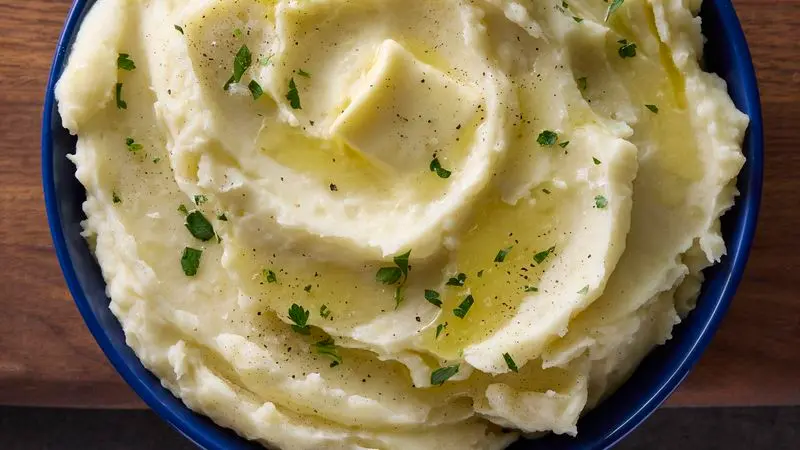
Easy homemade mashed potatoes are a dependable side dish with a smooth, creamy texture and rich buttery flavor. They pair well with everything from roasted chicken and meatloaf to holiday turkey and pot roast.
This recipe uses Yukon Gold potatoes, which have a naturally buttery flavor and mash easily without becoming dry. Warming the milk and butter before adding them helps the potatoes absorb the liquid evenly and keeps the finished mash hot.
The method is simple, but a few details make a noticeable difference: starting the potatoes in cold water, draining them thoroughly, and avoiding excessive mixing.
Why You’ll Love This Recipe
- The potatoes are creamy without requiring complicated ingredients.
- Yukon Gold potatoes provide a naturally rich flavor and smooth texture.
- The recipe uses one pot for boiling and mashing.
- It can be prepared in about 40 minutes.
- The quantities are easy to scale for holidays or family dinners.
- Leftovers can be refrigerated, frozen, or repurposed in other dishes.
Ingredients
- 3 pounds Yukon Gold potatoes: Their medium starch content produces creamy mashed potatoes with a buttery flavor.
- Cold water, as needed: Starting the potatoes in cold water helps them cook evenly.
- 1 tablespoon kosher salt, plus more to taste: Seasons the potatoes as they cook and flavors the finished dish.
- 3/4 cup whole milk: Adds moisture and creates a creamy consistency.
- 1/2 cup unsalted butter, cut into pieces: Adds richness and helps produce a silky texture.
- 1/2 cup sour cream: Provides extra creaminess and a subtle tang.
- 1/2 teaspoon ground black pepper: Adds mild warmth without overwhelming the potatoes.
- 2 tablespoons chopped fresh chives, optional: Add color and a mild onion flavor.
Ingredient Substitutions
- Yukon Gold potatoes: Russet potatoes can be used for a lighter, fluffier texture. You can also combine equal amounts of Yukon Gold and Russet potatoes.
- Whole milk: Use 2% milk, half-and-half, or unsweetened plain dairy-free milk. Lower-fat milk will produce slightly less-rich potatoes.
- Unsalted butter: Salted butter works well, but reduce the additional salt until you have tasted the finished potatoes.
- Sour cream: Substitute an equal amount of plain full-fat Greek yogurt or softened cream cheese.
- Fresh chives: Use chopped green onions or parsley, or omit the garnish.
- Black pepper: White pepper can be used if you prefer not to see black specks in the potatoes.
How to Make Homemade Mashed Potatoes
- Prepare the potatoes.
Peel the potatoes and cut them into evenly sized pieces, approximately 1 1/2 inches each. Keeping the pieces similar in size helps them cook at the same rate. - Cover with cold water.
Place the potatoes in a large pot and add enough cold water to cover them by about 1 inch. Add 1 tablespoon of kosher salt to the water. - Cook until tender.
Bring the water to a boil over medium-high heat. Reduce the heat to maintain a steady simmer and cook the potatoes for 15 to 20 minutes. They are ready when a fork or small knife slides easily into the center without resistance. - Warm the milk and butter.
While the potatoes cook, combine the milk and butter in a small saucepan. Warm over low heat until the butter melts and the milk is steaming but not boiling. Alternatively, warm them together in a microwave-safe container. - Drain the potatoes thoroughly.
Pour the potatoes into a colander and let them drain for about 1 minute. Return them to the warm pot and place it over low heat for 1 to 2 minutes, gently shaking the pot. This evaporates excess moisture that could make the mashed potatoes watery. - Mash the potatoes.
Remove the pot from the heat. Mash the potatoes with a handheld potato masher until no large pieces remain. For an especially smooth texture, pass them through a potato ricer instead. - Add the warm milk and butter.
Pour about two-thirds of the warm milk mixture over the potatoes. Fold it in gently with a wooden spoon or spatula. Add more as needed until the potatoes reach your preferred consistency. - Add the sour cream and seasonings.
Fold in the sour cream and black pepper. Taste and add more salt if needed. Avoid vigorous stirring, which can make the potatoes gummy. - Garnish and serve.
Transfer the mashed potatoes to a serving bowl. Garnish with chopped chives and an additional pat of butter, if desired. Serve warm.
Tips for Easy Homemade Mashed Potatoes
- Cut the potatoes into even pieces so they finish cooking at the same time.
- Begin with cold water rather than dropping the potatoes into boiling water. This allows the centers and outsides to cook more evenly.
- Salt the cooking water so the potatoes are seasoned throughout.
- Drain the cooked potatoes well and briefly dry them in the warm pot before mashing.
- Warm the milk and butter before adding them. Cold dairy cools the potatoes and does not blend as smoothly.
- Mash the potatoes before adding the liquid so you can remove lumps without overworking the mixture.
- Use a potato masher or ricer instead of a blender or food processor, which can create a gluey texture.
Common Mistakes to Avoid
Cutting the Potatoes Unevenly
Small pieces can become waterlogged before larger pieces are tender. Cut the potatoes into similarly sized chunks for consistent cooking.
Undercooking the Potatoes
Firm potatoes are difficult to mash and leave lumps in the finished dish. Cook them until a fork passes through the center easily.
Adding Cold Milk and Butter
Cold ingredients lower the temperature of the potatoes and can prevent them from absorbing the dairy evenly. Warm both before mixing.
Overmixing the Potatoes
Excessive stirring releases too much starch and makes mashed potatoes sticky or gummy. Fold the ingredients together only until combined.
Adding All the Milk at Once
Different potatoes absorb different amounts of liquid. Add most of the milk mixture first, then gradually add more until the desired consistency is reached.
Variations
Garlic Mashed Potatoes
Add 4 peeled garlic cloves to the pot with the potatoes. Boil them together, then mash the softened garlic into the potatoes.
Cheesy Mashed Potatoes
Fold 1 cup of shredded sharp cheddar or grated Parmesan into the hot mashed potatoes before adding the sour cream.
Loaded Mashed Potatoes
Top the potatoes with shredded cheddar, crumbled cooked bacon, chopped chives, and an additional spoonful of sour cream.
Herb Mashed Potatoes
Stir in 2 tablespoons of chopped fresh parsley, chives, dill, or a combination of herbs just before serving.
Dairy-Free Mashed Potatoes
Replace the butter with a dairy-free butter alternative and use warm, unsweetened plain dairy-free milk. Omit the sour cream or use a plain dairy-free alternative.
What to Serve With Easy Homemade Mashed Potatoes
- Roast chicken or turkey
- Classic meatloaf
- Pot roast or braised beef
- Pork chops with gravy
- Salisbury steak
- Roasted vegetables and mushroom gravy
How to Store
Allow leftover mashed potatoes to cool before transferring them to an airtight container. Refrigerate for 3 to 4 days.
Reheat them in a saucepan over low heat with a splash of milk and a small amount of butter. Stir occasionally and gently until heated through. Individual portions can also be reheated in the microwave, covered, in short intervals. Stir between intervals and add milk as needed.
Mashed potatoes can be frozen, although their texture may change slightly after thawing. Place cooled potatoes in a freezer-safe container and freeze for up to 2 months. Thaw them overnight in the refrigerator, then reheat slowly with additional milk and butter to restore moisture.
Frequently Asked Questions
What potatoes are best for mashed potatoes?
Yukon Gold potatoes create a creamy, buttery mash, while Russets produce a lighter and fluffier result. A combination of the two offers a balance of both textures.
Do I have to peel the potatoes?
No. Yukon Gold skins are thin and can be left on for a more rustic texture. Scrub the potatoes thoroughly and remove any damaged areas before cutting them.
Why did my mashed potatoes turn gummy?
Gummy potatoes are usually caused by overmixing or using a blender or food processor. These methods release too much starch. Use a masher or potato ricer and mix gently.
Can I make mashed potatoes ahead of time?
Yes. Prepare them up to 2 days ahead and refrigerate in an airtight container. Reheat slowly with a little additional milk and butter.
How can I keep mashed potatoes warm before serving?
Place them in a covered heat-safe bowl over a pot of barely simmering water for up to an hour. Stir occasionally and add a splash of warm milk if they begin to thicken.
How do I fix mashed potatoes that are too thick?
Fold in warm milk 1 tablespoon at a time until the potatoes reach the desired consistency.
How do I fix watery mashed potatoes?
Return them to a pot over low heat and stir gently until some of the excess moisture evaporates. Avoid adding more dairy until the consistency improves.
Final Thoughts
Easy homemade mashed potatoes require only a handful of familiar ingredients and a straightforward cooking method. Serve them alongside a weeknight dinner or prepare a larger batch for a holiday meal. Careful draining and gentle mixing will keep them creamy, smooth, and ready for gravy.