

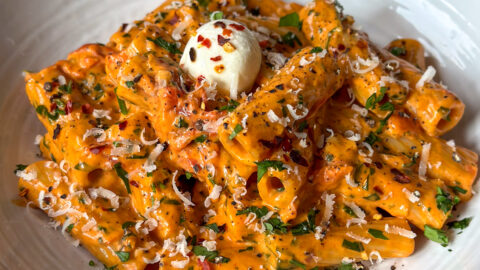
Creamy tomato pasta combines a savory tomato sauce with heavy cream and Parmesan for a smooth, balanced finish. The tomatoes keep the sauce bright and flavorful, while the cream softens their acidity without making the dish overly rich.
The sauce comes together while the pasta cooks, making this a practical option for a weeknight meal. Tomato paste adds depth, crushed tomatoes provide body, and reserved pasta water helps the sauce cling to every piece.
Serve the pasta on its own for a simple dinner or pair it with a salad, roasted vegetables, or garlic bread.
Why You’ll Love This Recipe
- The sauce is ready in about the same amount of time as the pasta.
- Crushed tomatoes and tomato paste create a full tomato flavor.
- Heavy cream gives the sauce a smooth texture without overwhelming it.
- The entire recipe uses straightforward grocery-store ingredients.
- You can adjust the sauce with vegetables, chicken, or red pepper flakes.
- Leftovers reheat well with a small splash of water or cream.
Ingredients
- 12 ounces pasta: Penne, rigatoni, fusilli, or another short pasta holds the creamy sauce well.
- 1 tablespoon kosher salt: Seasons the pasta water.
- 2 tablespoons olive oil: Used to soften the onion and build the sauce.
- 1 small yellow onion, finely diced: Adds mild sweetness and depth.
- 3 garlic cloves, minced: Provides savory flavor.
- 2 tablespoons tomato paste: Concentrates the tomato flavor and helps thicken the sauce.
- 1 can (14.5 ounces) crushed tomatoes: Forms the main tomato base.
- 1 teaspoon Italian seasoning: Adds oregano, basil, and other dried herb flavors.
- 1/4 teaspoon crushed red pepper flakes, optional: Adds gentle heat.
- 1/2 teaspoon kosher salt, plus more to taste: Seasons the sauce.
- 1/4 teaspoon ground black pepper: Adds mild warmth.
- 3/4 cup heavy cream: Makes the tomato sauce smooth and creamy.
- 1/2 cup freshly grated Parmesan cheese: Adds richness and helps the sauce cling to the pasta.
- 1/2 cup reserved pasta water, as needed: Loosens and emulsifies the sauce.
- 1/4 cup chopped fresh basil or parsley: Adds fresh flavor before serving.
Ingredient Substitutions
- Short pasta: Spaghetti, linguine, fettuccine, or another pasta shape can be used. Follow the package cooking time.
- Yellow onion: Substitute a small shallot or 1/2 teaspoon onion powder.
- Crushed tomatoes: Use tomato puree or blend canned diced tomatoes until mostly smooth.
- Heavy cream: Half-and-half can be used for a lighter sauce, though it will be slightly thinner. Avoid boiling it vigorously.
- Parmesan: Pecorino Romano can be substituted, but it is saltier, so reduce the added salt.
- Fresh basil: Use fresh parsley or an additional 1/2 teaspoon of Italian seasoning.
- Olive oil: Unsalted butter can be used for a richer flavor.
How to Make Creamy Tomato Pasta
- Boil the pasta water.
Bring a large pot of water to a boil. Add 1 tablespoon of kosher salt once the water is boiling. - Cook the pasta.
Add the pasta and cook according to the package directions until al dente. The pasta should be tender but still slightly firm in the center. Before draining, reserve 1/2 cup of the cooking water. - Sauté the onion.
While the pasta cooks, heat the olive oil in a large skillet over medium heat. Add the diced onion and cook for 4 to 5 minutes, stirring occasionally, until softened and translucent. - Add the garlic and tomato paste.
Stir in the garlic and cook for about 30 seconds. Add the tomato paste and cook for 1 to 2 minutes, stirring constantly. It should darken slightly and begin sticking to the bottom of the skillet. - Build the tomato sauce.
Pour in the crushed tomatoes. Add the Italian seasoning, optional red pepper flakes, 1/2 teaspoon salt, and black pepper. Stir well, scraping up any browned tomato paste from the skillet. - Simmer the sauce.
Reduce the heat to medium-low and simmer uncovered for 8 to 10 minutes. Stir occasionally. The sauce should thicken slightly while remaining loose enough to coat the pasta. - Add the cream.
Reduce the heat to low. Slowly stir in the heavy cream until the sauce is evenly pink and smooth. Let it warm gently for 2 minutes, but do not allow it to boil rapidly. - Add the Parmesan.
Sprinkle in the Parmesan a little at a time, stirring until it melts into the sauce. If the sauce becomes too thick, add reserved pasta water 1 tablespoon at a time. - Combine the pasta and sauce.
Add the drained pasta directly to the skillet. Toss over low heat for 1 to 2 minutes, until every piece is coated and the sauce clings to the pasta. Add more pasta water if needed. - Finish and serve.
Remove the skillet from the heat and stir in most of the basil or parsley. Taste and adjust the salt and pepper. Serve immediately with the remaining herbs and additional Parmesan, if desired.
Tips for the Best Creamy Tomato Pasta
- Cook the pasta only until al dente because it will continue cooking briefly in the sauce.
- Reserve the pasta water before draining. Its starch helps loosen the sauce without making it watery.
- Cook the tomato paste until it darkens slightly to deepen its flavor and remove the raw taste.
- Reduce the heat before adding the cream to prevent the sauce from separating.
- Use freshly grated Parmesan because it melts more smoothly than pre-shredded cheese.
- Add the Parmesan gradually rather than all at once to prevent clumping.
- Toss the pasta in the skillet for a minute or two so it absorbs some of the sauce.
Common Mistakes to Avoid
Forgetting to Reserve Pasta Water
Once the pasta is drained, the starchy water cannot easily be replaced. Scoop some out before draining so you can adjust the sauce consistency.
Burning the Garlic
Garlic cooks quickly and can become bitter. Add it after the onion has softened and cook it for only about 30 seconds before adding the tomato paste.
Boiling the Cream
High heat can cause the cream to separate or make the sauce oily. Lower the heat before stirring it into the tomatoes.
Adding Parmesan Over High Heat
Cheese can clump or become grainy when exposed to excessive heat. Keep the skillet over low heat and add the cheese gradually.
Overcooking the Pasta
Soft pasta can become mushy when tossed with the hot sauce. Drain it while it still has a slight bite.
Variations
Spicy Creamy Tomato Pasta
Increase the crushed red pepper flakes to 1/2 teaspoon, or add them according to your preferred heat level.
Creamy Tomato Spinach Pasta
Stir 3 packed cups of baby spinach into the finished sauce. Cook for 1 to 2 minutes, until the leaves wilt, before adding the pasta.
Chicken Tomato Pasta
Add 2 cups of sliced or shredded cooked chicken with the drained pasta. Toss until the chicken is heated through.
Creamy Tomato Sausage Pasta
Brown 8 ounces of Italian sausage in the skillet before cooking the onion. Drain excess fat if needed, then prepare the sauce as directed.
Roasted Vegetable Pasta
Fold in 2 cups of roasted zucchini, mushrooms, bell peppers, or broccoli when adding the pasta to the sauce.
What to Serve With Creamy Tomato Pasta
- Garlic bread or toasted Italian bread
- A simple green salad with vinaigrette
- Roasted broccoli or asparagus
- Sautéed green beans
- Grilled or roasted chicken
- Italian-style meatballs
How to Store
Allow leftover pasta to cool before transferring it to an airtight container. Refrigerate for 3 to 4 days.
Reheat the pasta in a skillet over medium-low heat with a splash of water, milk, or cream. Stir gently until the sauce loosens and the pasta is hot. Individual portions can also be reheated in the microwave in short intervals, stirring between each interval.
Cream-based pasta is best enjoyed fresh. It can be frozen, but the sauce may separate and the pasta may soften after thawing. For better results, freeze the tomato sauce before adding the cream, cheese, and pasta. Thaw it in the refrigerator, reheat gently, and then finish it with fresh cream and Parmesan.
Frequently Asked Questions
Can I use milk instead of heavy cream?
Whole milk can be used, but the sauce will be thinner and more likely to separate. Keep the heat low and consider using slightly less milk than the amount of cream called for.
Why did my creamy tomato sauce separate?
The heat was likely too high when the cream or cheese was added. Reduce the sauce to low heat and stir in the dairy gradually.
Can I use jarred marinara sauce?
Yes. Replace the crushed tomatoes, Italian seasoning, and tomato paste with about 2 cups of marinara sauce. Simmer it briefly before adding the cream.
What pasta shape works well with this sauce?
Penne, rigatoni, fusilli, shells, and farfalle all hold the sauce well. Long pasta such as spaghetti or fettuccine can also be used.
How can I make the sauce thicker?
Simmer the tomatoes for a few additional minutes before adding the cream. Parmesan will also thicken the sauce as it melts.
How can I thin a sauce that is too thick?
Add reserved pasta water 1 tablespoon at a time while tossing the pasta. Use only enough to make the sauce smooth and glossy.
Is creamy tomato pasta spicy?
The base recipe is mild. The optional red pepper flakes add gentle warmth and can be reduced or omitted.
Final Thoughts
Creamy tomato pasta is a straightforward meal with a smooth sauce, savory tomato flavor, and a gentle richness from cream and Parmesan. Keep the heat low when adding the dairy, then toss the pasta directly in the skillet for an evenly coated finish.